

Geraldine Chaplin
Geraldine Chaplin, born on July 31, 1944, in Santa Monica, California, is an internationally renowned actress with an extensive portfolio in European cinema. As the daughter of Charlie Chaplin, she appeared in his films at an early age and consciously chose a career path that established her particularly in French and Spanish arthouse productions. She speaks fluent English, Spanish, and French and now lives in Switzerland.
In AND IF WE ALL LIVED TOGETHER? (2011), a warm-hearted French-German ensemble comedy by Stéphane Robelin, Geraldine Chaplin plays the role of Annie, a psychologist in a senior citizens' shared apartment who, together with Jane Fonda, Pierre Richard, Guy Bedos, Daniel Brühl, and Claude Rich, attempts to live together in old age. Her performance blends harmoniously into the lovingly drawn everyday life of old age and brings emotional depth to a cheerful narrative tapestry about friendship and family.
In the drama ANCHOR OF LOVE (original title “Anchor and Hope”, 2017), directed by Carlos Marques-Marcet, Geraldine Chaplin plays the role of Germaine, mother of the character Eva (Oona Chaplin). Her interplay with Oona Chaplin and Natalia Tena elevates the film to the level of a family confrontation about life planning, mother-daughter relationships, and alternative family models in a lesbian couple context. The film was praised for its realistic narrative style, emotional sensitivity, and chemistry between the actors.
Geraldine Chaplin's career includes numerous style-defining roles in masterpieces such as “Doctor Zhivago,” “Nashville,” ‘Chaplin’ (as her grandmother Hannah Chaplin), and contemporary films such as “The Orphanage” and “In the City Without Limits.” She has received multiple Golden Globe nominations and won the Goya Award for her work in Spanish cinema.
Films
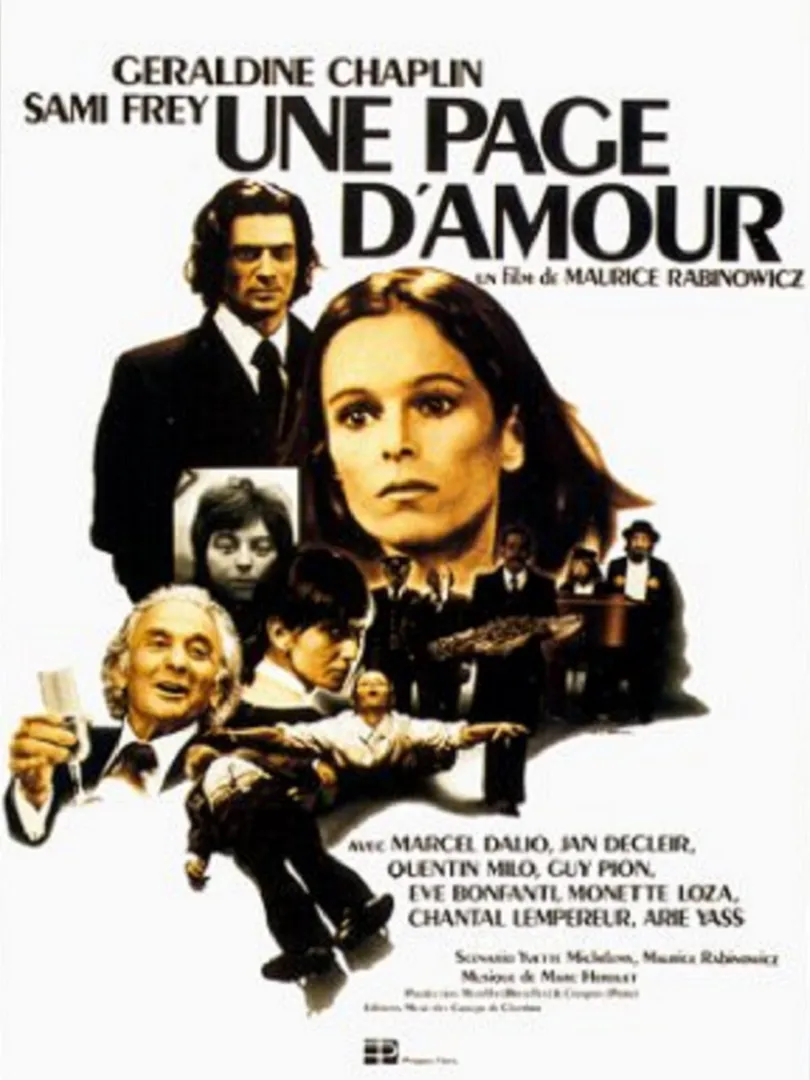
Une page d'amour
1978 | 93 min | Timeless
François (Sami Frey), a Jewish lad, works for an insurance company and is engaged to a Jewish girl. His world is very ordered and secure and perhaps feels a bit claustrophobic. When he observes that a murderer has been declared psychologically incompetent and is to be placed in a mental institution, probably for the rest of his life, François feels the murder's plight very keenly. As time goes by, the murderer's situation is more and more unbearable to him, and he breaks off his engagement. Afterward, ...